
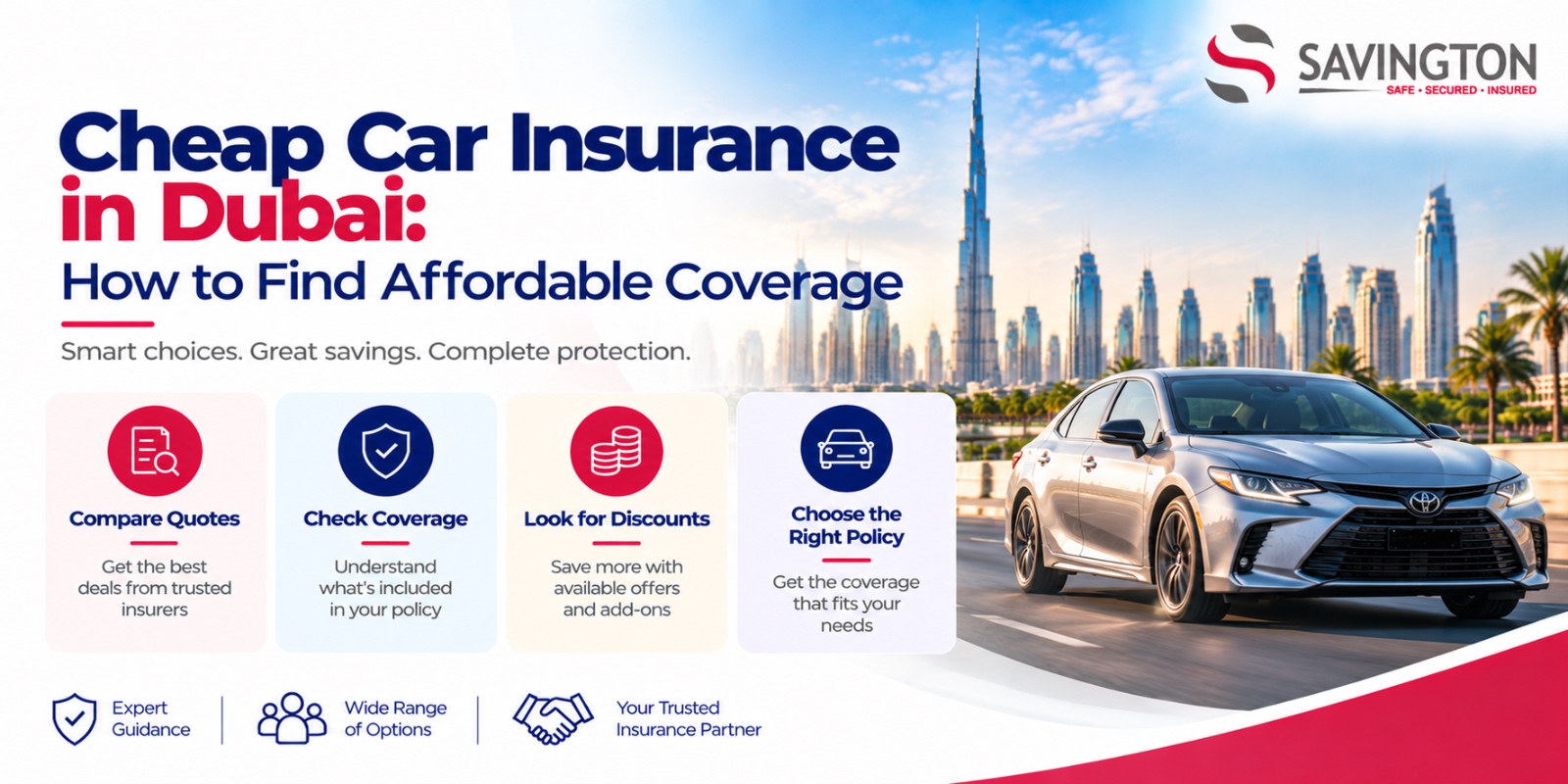
Cheap Car Insurance in Dubai: How to Find Affordable Coverage
Finding cheap car insurance in Dubai drivers can rely on does not mean settling for inadequate protection. With the right approach, you can reduce your insurance costs while maintaining coverage that suits your vehicle, driving habits and financial situation.
Car insurance premiums in Dubai vary depending on factors such as vehicle value, driver profile, claims history, coverage type and selected benefits. While third-party insurance is generally less expensive than comprehensive insurance, the cheapest policy may not always offer the best financial value.
The smarter approach is to compare quotations, understand policy limitations and identify legitimate ways to reduce premiums. Here is how to find affordable motor insurance in Dubai without overlooking the protection you may need.
Compare Insurance Quotes Before Making a Decision
One of the simplest ways to find cheap car insurance Dubai options is to compare quotations from multiple insurers before renewing or purchasing a policy.
Different insurers may assess the same vehicle and driver differently. As a result, premiums and available benefits can vary even when the policies appear similar.
However, comparing prices alone can be misleading. A low-priced policy may have a higher deductible, a narrower repair network or fewer additional benefits.
When comparing car insurance quotes Dubai drivers receive, review these factors:
- Annual premium: The total amount payable for the policy.
- Coverage type: Whether the policy provides third-party liability or comprehensive protection.
- Deductible: The amount you may have to contribute towards an eligible claim.
- Repair arrangements: Whether repairs are available through approved garages or authorised dealerships, subject to policy terms.
- Additional benefits: Roadside assistance, rent-a-car benefits and other optional covers.
- Exclusions and limits: Situations where coverage may not apply or where specific benefits have financial limits.
For a meaningful comparison, request quotations with similar coverage levels and deductibles. This helps you identify whether a cheaper quotation genuinely offers better value or simply provides fewer benefits.
Choose Between Third-Party and Comprehensive Insurance
The type of coverage you choose has a significant influence on your premium.
Third-party car insurance UAE policies primarily cover eligible liability for injury or property damage caused to others, subject to the policy and applicable law. They generally cost less than comprehensive policies because they do not ordinarily cover accidental damage to your own vehicle.
Comprehensive insurance generally includes third-party liability protection and cover for eligible damage to your insured vehicle. Depending on the policy, it may also cover risks such as theft, fire and certain natural hazards.
Which option makes sense depends on your circumstances.
For example, a driver with an older vehicle and enough savings to manage potential repair costs may consider third-party cover after assessing the risks. Someone with a newer, expensive or financed vehicle may prefer comprehensive insurance because repairing or replacing the vehicle could be financially challenging.
Before choosing the cheapest option, ask yourself:
- What is my vehicle’s current market value?
- Could I afford to repair or replace it without insurance?
- Does my finance agreement require comprehensive coverage?
- How frequently do I drive?
- What level of financial risk am I comfortable accepting?
The lowest premium is not necessarily the most economical choice if an accident leaves you paying substantial repair costs yourself.
Reduce Your Premium Through Practical Steps
Finding affordable car insurance UAE drivers can benefit from involves making informed choices rather than removing essential protection.
Several practical steps may help reduce your premium, depending on the insurer’s underwriting criteria.
- Compare policies at renewal. Do not automatically accept the first renewal quotation. Check alternative offers and compare the coverage before deciding.
- Review optional add-ons. Benefits such as roadside assistance, rental-car coverage or agency repairs may be useful, but their value depends on your vehicle and driving requirements. Remove optional benefits you do not need, provided the resulting policy still offers suitable protection.
- Choose your deductible carefully. A higher deductible may reduce the premium with some insurers. However, only consider this if you can comfortably afford the additional amount when making an eligible claim.
- Maintain accurate driving and claims information. Provide correct details about your vehicle, driving history and previous claims. Never misrepresent information to obtain a lower quotation.
- Select suitable repair arrangements. If agency repairs are not essential for your vehicle, a policy using approved non-agency garages may be worth comparing. Check the repair conditions before making a decision.
- Avoid unnecessary coverage duplication. Review whether optional benefits are already provided by another policy or service you have. Confirm the terms before removing any benefit.
These measures can help you find low-cost car insurance Dubai options without relying on misleading offers or compromising on coverage you genuinely need.
Understand What You Give Up With Cheaper Coverage
A low premium can be attractive, but every policy has conditions that determine when and how the insurer pays a claim.
Before purchasing cheap car insurance Dubai drivers should understand the trade-offs involved.
For example, third-party insurance generally does not pay for accidental damage to your own vehicle. If you cause an accident and your car needs expensive repairs, you may have to pay those costs yourself.
Even comprehensive insurance has limitations. Certain incidents, drivers, uses or types of damage may fall outside the policy’s coverage. Additional benefits can also have separate limits, deductibles or eligibility conditions.
Pay particular attention to:
- Own-vehicle damage: Check whether accidental damage to your vehicle is included.
- Deductibles: Understand the amount you must contribute towards a covered claim.
- Repair restrictions: Confirm whether the insurer uses approved garages or offers agency repairs under specified conditions.
- Exclusions: Review situations in which the insurer may decline a claim under the policy terms.
- Additional benefits: Verify whether roadside assistance, rental-car benefits and other extras are included or optional.
- Driver and vehicle conditions: Check any restrictions involving authorised drivers, vehicle modifications or how the vehicle is used.
A cheaper policy can be appropriate when its limitations match your needs and financial circumstances. The important point is to understand these limitations before an accident occurs.
Consider Your Car’s Age and Actual Insurance Needs
Your vehicle’s age and market value can influence which insurance option offers the best balance between price and protection.
Newer vehicles may be more expensive to repair or replace, particularly when specialised parts or manufacturer-approved repairs are required. Owners may therefore place greater importance on comprehensive coverage and suitable repair benefits.
For older vehicles, the cost of comprehensive insurance should be assessed against the vehicle’s current value, potential repair expenses and the premium difference compared with third-party cover.
However, an older vehicle does not automatically mean that comprehensive insurance is unnecessary. If you rely on the car daily or could not comfortably pay for significant repairs, broader coverage may still be worthwhile.
When reviewing affordable car insurance UAE options, consider your overall financial position rather than relying on vehicle age alone.
At Savington, drivers can evaluate available policies by comparing coverage, deductibles, repair options and premiums. Reviewing these factors together can help identify a policy that suits both the vehicle and the owner’s budget.
Final Thoughts
Finding cheap car insurance Dubai drivers can trust requires more than choosing the lowest quotation. The best approach is to compare similar policies, understand the difference between third-party and comprehensive cover, and identify savings that do not expose you to unnecessary financial risk.
Before purchasing or renewing your policy, review the deductible, repair arrangements, exclusions and additional benefits. The right insurance is one that balances affordability with the level of protection your vehicle and circumstances require.
MUST READ: Basic vs Enhanced Health Insurance in Dubai: Choosing the Coverage That Fits You
Get a Quote Today!
Let us help you protect your business and your employees with our comprehensive Workmen’s Compensation Insurance solutions.
Contact us at +971 4 3962333 (Savington Insurance Brokers Dubai) or visit https://savington.ae/ to learn more about our insurance offerings.
Frequently Asked Questions
- Where can I find cheap car insurance in Dubai?
Compare quotations from multiple insurers or use an insurance broker to explore available options. Review coverage, deductibles, repair arrangements and exclusions alongside the premium.
- What is the cheapest type of car insurance in the UAE?
Third-party liability insurance is generally less expensive than comprehensive insurance because it does not ordinarily cover accidental damage to your own vehicle.
- How can I reduce my car insurance premium?
Compare renewal quotations, review optional benefits, consider an affordable deductible and check whether alternative repair arrangements suit your vehicle. Always provide accurate information to the insurer.
- Is cheap third-party car insurance enough?
It may suit some drivers, but it primarily covers eligible liability to others. Damage to your own vehicle is generally not covered, so consider whether you could afford those costs yourself.
- Does a car’s age affect insurance costs in Dubai?
Yes, vehicle age and value can influence premiums, repair costs and the suitability of different coverage options. Insurers also consider other factors, including driver details, claims history and policy benefits.





 ×